Is wrong doctrine harmful?
 The employment tribunal concerning Jeremy Pemberton is over, but it is far from finished. Every bit Jeremy himself comments on the previous post on this, final submissions will be offered in July and read in September, and the judgement will be made after that.
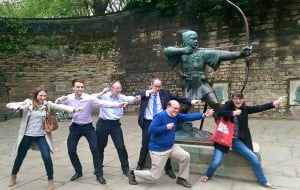
I had not realised that the tribunal would be taking place down the road, nor that it was open to the public, else I might maybe accept planned to attend and listen for myself. (The movie here is of Permberton's legal team outside Nottingham Castle.) So I accept had to rely on reports from others—though I think they have been reliable. For me, the low point came in reading the testimony of Richard Inwood yesterday. I need to exercise some caution hither—until very recently Richard was my Acting Diocesan Bishop. My potent impression is that he has been put in a very hard position, in effect the key histrion in the most pressing consequence of the moment for the Church, on which national Church issues might hinge, just perhaps without the back up from the center that i might have expected. Fifty-fifty Alan Wilson comments (on his Facebook page):
It would never practise to assume on the judgment of the tribunal. Nor to imagine matters must end in this courtroom. Cross examination is a cruelly forensic business concern, of form, that probes deeper than synodical grandstanding and politics. That said, with all the resources, legally, for which any respondent could hope, all major heads of resistance crumbled out of their own witnesses' mouths (equally tin be seen from many printing comments). This was mostly from their arguments' own internal incoherence and contradictions. I am very grateful to +Richard, who is a skillful and decent homo, for his lack of guile and truthfulness about what was, IMHO, an Hour Hell'southward Kitchen, not entirely of his making.
We all need to take Alan's first point very seriously; none of the states can know the outcome until it is announced, and information technology is not clear exactly what difference information technology will make in the end. But a cardinal turning point appeared to arise on the question of 'impairment'. The dialogue is reported in the The Guardian equally follows, but there is no reason to question its reliability.
Inwood was asked by Sean Jones QC, interim for Pemberton, what harm he thought information technology would do the Church of England to have granted a licence to permit the 59-yr-former to be appointed as chaplain. "We know that Canon Pemberton wanted to join. In your view he was perfectly capable, you had no reason to believe he wasn't. He was the trust's preferred candidate, and that when you refused the licence, at very least, the human being responsible for making recommendations to the trust was broken-hearted to go you to remember over again. We know the House of Bishops guidance did not require you lot not to grant. And you say you lot took the determination. What was it you feared would happen? What harm would arise if you gave Canon Pemberton the licence?"
Inwood replied: "It is not a matter of danger but by my own oath of honour and obedience, nether authorization, to maintain the doctrine of the church. It's my own personal determination."
Jones asked: "You weren't anticipating any damage, whether to him, to you, or the trust? The bishop replied: "Certainly no harm to the trust or the church building."
The tribunal estimate, Peter Britton, picking upward on this respond, suggested it left him with a conundrum. He asked the bishop: "If information technology would be no harm to the church building, and the doctrine is well-nigh protecting the beliefs of the church, then oasis't you got an innate puzzler? If it so cardinal to the doctrine, thus the breach would cause impairment. Simply if you call back it is of no impairment to the church surely that ways the reliance on this existence fundamentally doctrinal, as to otherwise bring downwardly impairment on the church building, is a disrepair flush isn't it?"
I am not a lawyer, but I was in one case a Personnel Manager. I would imagine that the lack of harm had the appointment been made might well be a crucial one, since, along with the apparent lack of requirement from the House of Bishops (which is surely mistaken), information technology makes Inwood'southward decision look arbitrary and therefore vindictive. (This cannot, of course, be an accurate description of the reasons why Inwood took the conclusion he did.)
But what strikes me more is the theological significance of this, something the tribunal will take had no interest in. Merely look carefully at the claims being fabricated here in this dialogue:
1. There would exist 'no damage' done to the NHS Trust had he been appointed. And yet (as David Shepherd points out), the NHS' own guidance comments: 'Chaplains must bide by the requirements of their sponsoring organized religion or belief community, their contracting organization, the Code of Behave and all relevant NHS/Dainty standards'. This is conspicuously not the case, and then at some level the NHS must believe at that place is a problem here.
two. Inwood comments that is information technology 'his ain personal decision' to uphold the doctrine of the Church building. In fact, this is integral to the office of a bishop. The Ordinal expresses information technology thus:
Bishops are ordained to be shepherds of Christ'south flock and guardians of the organized religion of the apostles, proclaiming the gospel of God's kingdom and leading his people in mission. Obedient to the phone call of Christ and in the ability of the Holy Spirit, they are to gather God's people and gloat with them the sacraments of the new covenant.
It was surely a mistake for Inwood to suggest either that he had freedom in this, or that he did it merely out of personal decision. If the House of Bishops have issued a clear directive on this matter, how can any bishop have freedom to ignore this or fail to respond to breaches of it?
three. Inwood then goes on to suggest that 'no harm' would come of this breach of the clear instruction of the Firm of Bishops (who made a very clear argument as recently equally February). This seems to me a very odd argument at ii major levels.
First, if there is 'no harm' when clergy defy their bishops, and so we are heading for a fourth dimension of institutional chaos, when anybody 'does what is right in his (her) ain optics'. As we motion into a more clearly postal service-Christendom context, where residual loyalty to the institutional church is disappearing faster than the bath-water down a plughole, this is going to exist a applied disaster.
Simply the underlying event is (intriguingly) the one that the tribunal estimate intervenes on. If doctrine has been breached, only no impairment will come, what (he asks in effect) is the point of doctrine? If the bishops of the Church of England have lost conviction in the importance of correct doctrine, and the danger of wrong doctrine, so nosotros are all in deep problem.
The moment I mention 'doctrine' I tin can run into the rolling of eyes, in part because of the history of doctrinal dispute the has scarred European history for centuries, and in part because of a reaction against the kind of post-Enlightment rationalist approach that reduces doctrine to propositions. Only, equally Anthony Thiselton points out inThe Hermeneutics of Doctrine, for the first Christians doctrine was about their fundamental disposition in life; the claims of the creeds and credal statements weren't but claims most facts, but what they based their life on. They really believed that 'The truth volition set you free' (John viii.32). That is why doctrine matters, not least in this area of what it means to be created, male and female in the epitome of God, and the implications of that for sexual behaviour. If the bishops do non believe that wrong doctrine in this area is harmful, and so now is the fourth dimension to carelessness whatsoever theology of matrimony. In fact:
"Christianity is based on revealed doctrine, enabling individuals to live rightly before a Holy God as followers of Jesus Christ. He tells u.s.a. how to live in all areas of life, including in areas of sexual behaviour. No denomination is at liberty to invent its own doctrine or to sacrifice revealed doctrine on the altars of contemporary manner. We cannot be authentically Christian whilst simultaneously rejecting the educational activity of the one we claim to follow." (Rev Simon Austen, Rector of St Leonard's Church, Exeter Diocese)
That is why the ministry of didactics is at the heart of Anglican understandings of what information technology ways to be deacon, priest (presbyter) and bishop. That is why, in the Manufactures, preaching and the sacraments go hand in hand—teaching must lead to action, merely action without teaching is like a send without a rudder.
I sincerely promise that senior bishops in the Church will now speak up and correct the impression that has been given. Doctrine does underlie this outcome; doctrine does matter; wrong doctrine causes harm. If they don't speak at present and publicly, I cannot see only that information technology will be the end of the Church building of England as we know it.
Much of my work is done on a freelance ground. If yous have valued this post, would you considerdonating £i.20 a month to support the production of this blog?
If you enjoyed this, do share it on social media (Facebook or Twitter) using the buttons on the left. Follow me on Twitter @psephizo. Like my page on Facebook.
Much of my piece of work is done on a freelance basis. If you take valued this mail, you can brand a single or echo donation through PayPal:
Comments policy: Good comments that appoint with the content of the post, and share in respectful debate, tin can add real value. Seek first to understand, then to exist understood. Brand the most charitable construal of the views of others and seek to learn from their perspectives. Don't view contend as a conflict to win; address the argument rather than tackling the person.
gonzalezbegaind00.blogspot.com
Source: https://www.psephizo.com/sexuality-2/is-wrong-doctrine-harmful/
0 Response to "Is wrong doctrine harmful?"
Post a Comment